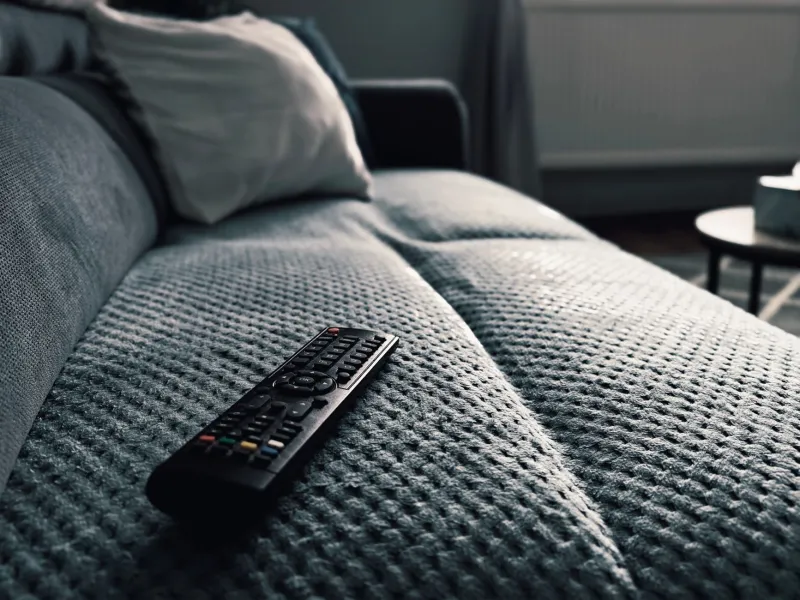
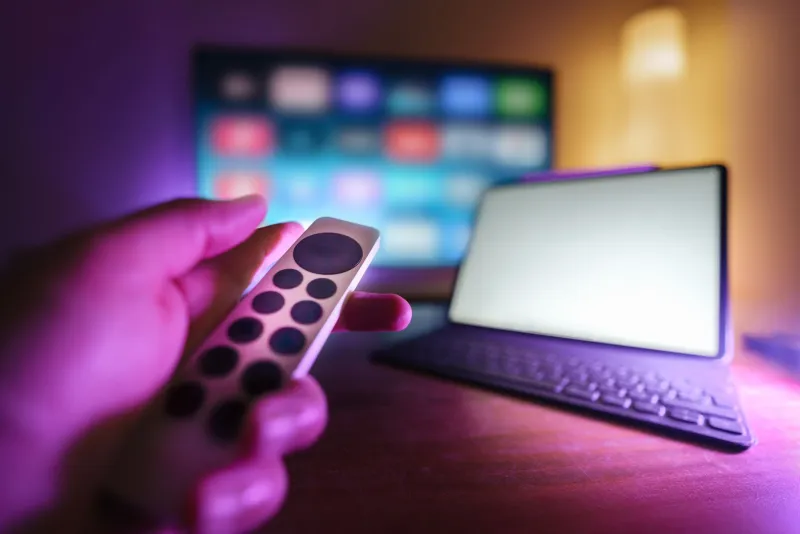
The Living Room TV Called. Nobody Picked Up.

Photo by Photo by BoliviaInteligente on Unsplash on Unsplash
The other night I walked past my parents' living room at 8 p.m. and the TV was off. Not off like someone turned it off — off like nobody had considered turning it on. Dad was in the recliner on his phone. Mom was at the kitchen table with her iPad. My teenage brother, visiting from college, was in his childhood bedroom with the door shut and earbuds in.
Three people, four screens, zero shared anything.
And I couldn't stop thinking: the big TV used to be the whole point of the room.
When the TV Had a Schedule and We Had to Keep It
If you grew up in an American household in the '90s or 2000s, you know the ritual. Thursday night, NBC, everybody on the couch. Somebody's job was to be done with dinner by 7:45. The TV wasn't a device — it was an appointment the whole family kept together.
It didn't matter if everyone wanted the same thing. That was kind of the beauty of it. You sat through your sister's show because next week she'd sit through yours. You learned to tolerate laugh tracks and local news and your dad's obsession with whatever war documentary was on PBS. The negotiation was the family time.
That world is gone. Not fading — gone.
I Asked Around, and the Answers Were Brutal
I texted a handful of friends and family across a few states and asked one question: who in your house actually uses the living room TV?
A friend in Ohio said it's her and the dog, maybe twice a week. Her husband watches everything on his phone in bed. Her kids have never once turned on the big screen voluntarily.
My cousin in Texas said his TV is "basically a very expensive picture frame." It displays a screensaver of mountains. The mountains are winning.
A coworker in Georgia admitted the only time the family TV goes on is Thanksgiving, and even then it's background noise for the game someone's streaming on a laptop anyway.
The pattern was the same everywhere: the big screen became a fallback device. The thing you use when the thing you actually want is occupied.
What Replaced the Ritual
Here's the thing — it's not like people stopped watching. Everyone I talked to watches more than ever. They just watch alone, on their own accounts, on their own schedules, on their own screens.
Everybody's got a profile now. Everybody's got a queue. Nobody's show overlaps with anybody else's show. My parents live in the same house and have literally never seen the same episode of anything in three years.
We didn't lose TV. We lost the couch.
And I get the appeal, I really do. No more fighting over the remote. No more sitting through something you hate. Convenience won, and convenience is genuinely convenient.
What We Quietly Traded Away
But here's my honest opinion: we gave up more than we noticed at the time.
Shared TV was a low-stakes reason to be in the same room. Nobody had to say "hey, want to hang out?" — you just flopped on the couch when your show came on. The conversation happened in the gaps: the commercial break, the credits, the "wait, who was that guy?" questions. It was ambient togetherness. You didn't have to schedule it or make it meaningful. It just happened, nightly, for free.
Now togetherness is a calendar invite. And calendar invites get declined.
There's also the smaller loss: the shared reference pool. Used to be everyone at school or the office saw last night's episode and you could talk about it. Now the group chat is the only water cooler left, and even it is split across six different shows and three spoiler warnings.
I'm Not Selling Nostalgia, Exactly
Look, I'm not going to pretend the old way was perfect. Somebody always got outvoted. Somebody always controlled the remote like a dictator. If you were the youngest, you watched what everyone else wanted until you left the house. There's a reason my generation sprinted toward personal screens the second we could.
But I do think something worth keeping slipped out with the bathwater. The living room TV didn't die of natural causes. We all just quietly stopped showing up, one convenience at a time, and nobody called the meeting to vote on it.
So here's my small proposal: pick one night. One show everyone can tolerate. One couch. Phones in a basket by the door if you're feeling ambitious.
The big screen's not dead yet. It's just waiting for us to come back — and unlike everything else in your life, it doesn't need a login.